

By Justin Yamashita, MSc. Benchtop, site, CRO: three levels of basic and clinical research, explained without spin.
From Open Label Media, the team behind Root to Rx, come free tools for telling what’s true. New here? Start with the two-minute Skeptic Type quiz to see how you naturally read a claim, at openlabelmedia.com/skeptic-type. Then practice with Got Skepticism? and Stay in the Room. All free, in your browser at openlabelmedia.com.

PLAIN TALK · ISSUE 002 · FOUNDATIONS
They Built a COVID Vaccine in Less Than a Year. Here’s What Actually Happened.
If you heard “less than a year” and thought: something feels wrong about that, then you’re not being paranoid. You’re asking exactly the right question. Of note, all scientists are skeptics, so you’re in good company.
Vaccines usually take a decade. COVID-19 vaccines took about eleven months from first human trial to emergency authorization. That’s not normal. You deserve to know the how and the why.
This issue is the story of what Operation Warp Speed (OWS) actually was, how they did things differently, and why. When you understand the mechanics, it’s not the story you may have been told or the story you interpreted. Let me come at this for you from the project management perspective. A fundamental principle of project management is the project management triangle that says you can only optimize two of the three constraints: Time, Cost, and Quality at the same time. The third one will be affected whether you like it or not. So, if you want something fast, you either drop the quality, or increase the cost because this triangle is sitting balanced on a pin, so if one side goes up, the other parts going to be affected. If you want something cheap, it takes longer or the quality is lower. Let’s use this triangle as a foundation to build from. What happens if there’s an unprecedented increase in Cost and human resources get pulled from other projects and therapeutic areas to largely focus on one area?
One more thing before we dive in. If you read Issue 001, you know how the Tuskegee Syphilis Study broke public trust in medical research, and what came after: independent ethics boards, mandatory informed consent, and the Belmont Report. Those protections were not set aside for Operation Warp Speed. Every trial participant signed an informed consent document. Every safety decision went through an IRB and independent monitoring boards. The speed was real. So were the safeguards.
Start Here: The Myth
“They rushed it. They skipped steps to get it out fast. No one knows the long-term effects.”

This is the most common concern I hear, and to address it directly, the concern about speed is real and reasonable. But the conclusion that steps were skipped is not what the evidence shows.
What actually happened is something people in project management understand immediately, and the scientists advising the administration understood intimately.
They didn’t compress the science. They ran it in parallel, at risk.
The Iron Triangle: A Quick Lesson in How Anything Gets Built
There’s a concept every project manager knows called the Iron Triangle (also called the Triple Constraint or the Project Management Triangle). Think of it as a triangle where each corner is one constraint. Pulling on any corner affects the other two. Here is how each corner works:
When you build anything, say a house, a bathroom renovation, a product, a drug, you have three variables:
Time: how fast you want it done
Cost: how much money you’re willing to spend
Scope/Quality: what the thing actually does and how well
The classic rule: you can optimize two, but the third will suffer. Want it fast and cheap? Quality takes a hit. Want it fast and excellent? It’s going to be expensive. Want it cheap and excellent? It’s going to take more time because your family friend is working on your bathroom renovation on weekends and getting paid in dinners.
Normal drug development plays the long game: limited money, careful sequential steps, time is flexible. The average drug takes ten to fifteen years and costs over a billion dollars to develop.
Operation Warp Speed broke the triangle by removing one constraint entirely: cost.
The U.S. government committed over $10 billion before a single vaccine was proven to work. Before the clinical trial data was in. Before anyone knew which vaccine would succeed.
If you want to understand how that kind of budget reshapes every corner of the triangle, this breakdown is worth reading.
They didn’t compress the science. They funded multiple bets at once, and they ran steps that normally happen one after another at the same time in parallel rather than in sequence.
What “Running Steps in Parallel” Actually Means
Normally, clinical trials, such as vaccine development, work like a relay race:
Phase 1 trial finishes → wait for results → apply for Phase 2
Phase 2 finishes → wait for results → apply for Phase 3
Phase 3 finishes → start building manufacturing capacity
Manufacturing approved → distribute
Each step waits for the one before it. That’s not caution for its own sake. That’s who bears the financial risk. No drug company is going to build a billion-dollar factory for a vaccine that might fail Phase 3.
Warp Speed changed that risk equation:
Phase 1, 2, and 3 trials ran with overlapping enrollment
Manufacturing at massive scale started during Phase 3, before results
Regulatory review began in real-time as the data came in, not after
Six different vaccine candidates were funded simultaneously
The government said: if the vaccine fails, we lose the money. That’s on us. You focus on the science. Companies that would never risk their own capital on an unproven product could now move without that constraint because they weren’t trying to prove anything to investors to fundraise for the next financial quarter, they had a guarantee.
The vaccine was ready to ship the day it was authorized because the factories were already running. Not because anyone cut corners. Because the government absorbed the financial risk.
Now Here's the Part Most People Don't Know
The mRNA technology used in the Pfizer and Moderna vaccines sounds like it appeared out of nowhere in 2020. It didn't.
To understand something we'll explain further in future newsletters, here is the central dogma of biology. Within our cells is DNA. This is the master blueprint, the master library of instructions, like a cookbook. The cookbook is safely stored in the library (nucleus of the cell). Next, pages of that cookbook are opened and messenger RNA (mRNA) is a photocopy of one recipe. Then that recipe is taken to the kitchen (almost like a 'messenger' relaying an instruction to the cook). It's temporary and will get thrown in the garbage after the last part of dinner for your friend renovating your bathroom is made. Next, machinery creates a protein from that instruction, and that's our dinner entree. Our body uses those proteins to build everything. Be it muscles, enzymes, hormones, or importantly to this story, immune defenses against viruses.
Another way to think of mRNA is like a USB drive that carries instructions. When you plug it into a computer (your cell), the computer reads those instructions and builds what the code describes.
Scientists have been developing that USB drive for over 40 years. Two of the scientists most responsible for making it work in humans are Drs. Katalin Kariko and Drew Weissman. Dr. Kariko spent years at the University of Pennsylvania solving the hardest problem: natural mRNA triggers an immediate immune attack when injected, which made it toxic at therapeutic doses. Working with immunologist Dr. Drew Weissman, she discovered that swapping in a chemically modified version of one of mRNA's building blocks allowed it to slip past that immune detection entirely. They published the finding in 2005. Most of the scientific community ignored it at the time. In 2023, they were awarded the Nobel Prize in Physiology or Medicine for that work.
They had used the platform to try to fight cancer, HIV, the flu, and coincidentally, other coronaviruses. The delivery system, the safety profile, the basic mechanism, all of it had been tested in human trials before COVID-19 existed.
What COVID-19 required was writing new code for an existing device. The USB drive was ready. The cookbook was already tested and many dinner entrees had been made from it. Scientists just needed to load the right instructions, in this case, instructions to build the spike protein of SARS-CoV-2, the knob the virus uses to enter your cells.
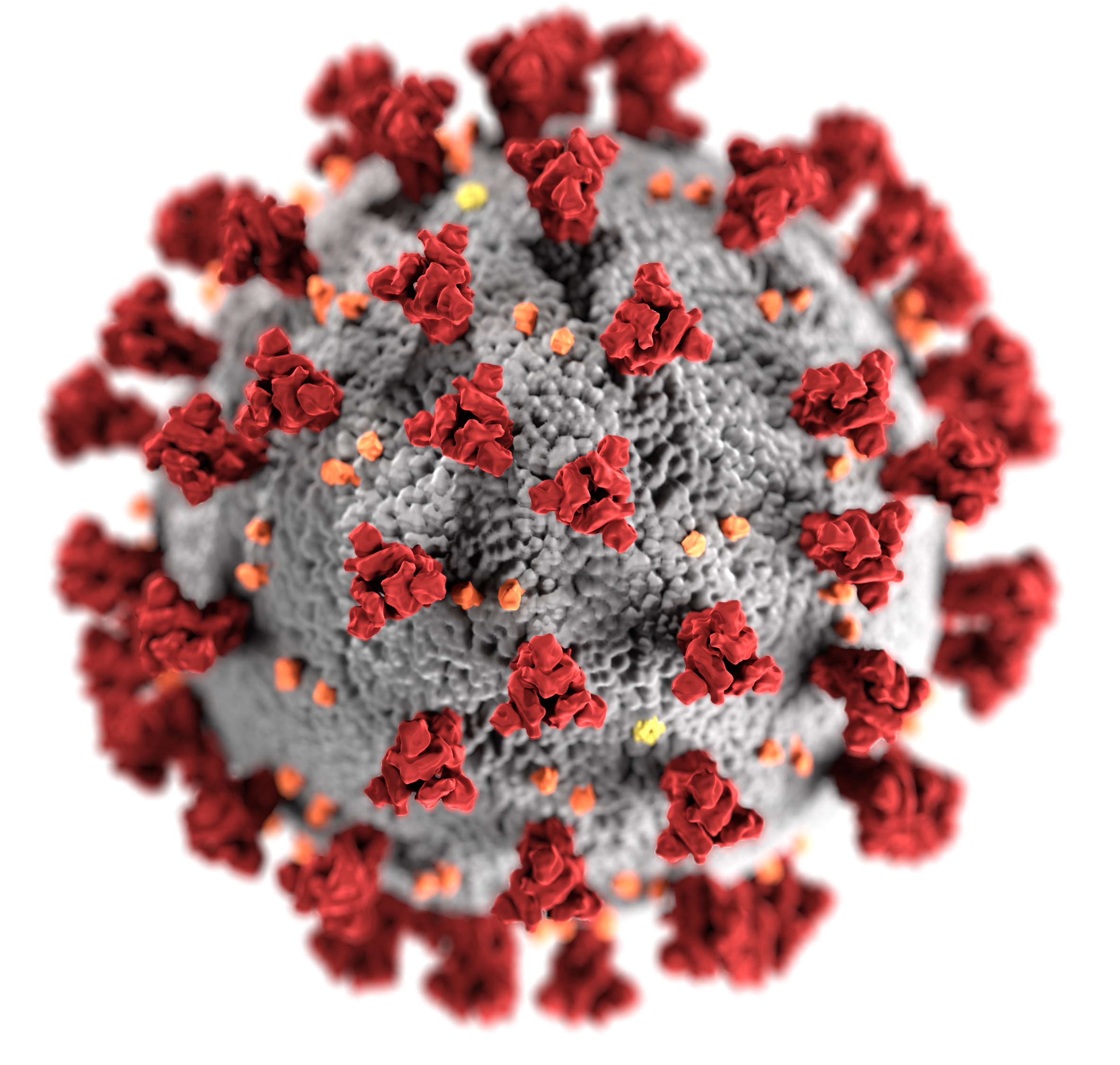
SARS-CoV-2 coronavirus. Image: CDC/NIAID, public domain.
Reprogramming took weeks. Not because they were rushing. Because decades of work had already answered every other question. The specific instructions loaded into the Moderna vaccine were designed by Dr. Kizzmekia Corbett-Helaire, who led the coronavirus vaccine research team at the NIH's Vaccine Research Center. Her group had been studying and preparing spike-based immunogens for coronaviruses for years before SARS-CoV-2 was identified. When the sequence was published in January 2020, her team was ready within 48 hours.
(Next week, we go deep on the 40-year history of mRNA research, the scientists, the failed bets, and why 2020 was not a surprise to the people who had been doing this work.)
What the Long-Term Safety Data Actually Shows
This is a fair topic, and it deserves a straight answer rather than either dismissal or alarm because there have been concerns about vaccines for decades, and there were concerns before, during, and after the COVID vaccines were distributed to the general public.
Confirmed real signals
There are adverse events (side effects) that the surveillance systems identified, some of which were not anticipated at the scale they occurred. The clearest is myocarditis, an inflammation of the heart muscle, primarily in young males aged 16 to 30 after the second mRNA dose. The rate was approximately 11 to 22 cases per million doses in the highest-risk group, above background rates. Most cases were mild and resolved without intervention. The FDA updated its guidance once the signal was confirmed. This is a 0.0011% to 0.0023% rate.
One point worth understanding: COVID-19 itself causes myocarditis at substantially higher rates than the vaccine does. The reason comes down to biology. When the actual virus infects the body, it triggers a broad, intense immune response including direct invasion of heart tissue, extended inflammation, and in some cases a cytokine storm where the immune system overreacts across multiple organ systems. The vaccine delivers only the spike protein instructions, without the rest of the virus, so the immune response is more contained. The rare post-vaccination myocarditis is thought to involve the immune system cross-reacting with heart tissue in ways researchers are still characterizing. It happens. It happens far less often than with actual infection.
A second confirmed signal, thrombosis with thrombocytopenia syndrome, blood clots combined with low platelet counts, was identified with the adenoviral vector vaccines (Johnson and Johnson, AstraZeneca), not the mRNA vaccines. The mechanism is now well understood and resembles a reaction to a blood-thinning medication. Both vaccines were pulled or restricted in multiple countries once this was confirmed.
Emerging and under study
A smaller category involves people reporting post-vaccination syndromes including heart rate irregularities and nerve symptoms that look similar to some long COVID presentations. The NIH's RECOVER initiative is actively studying these. Causality has not been firmly established, the numbers are small relative to the vaccinated population, and this is genuinely difficult science. But researchers are taking it seriously, not dismissing it.
What the evidence does not support
Some widely circulated claims did not hold up to peer-reviewed scrutiny. The idea that mRNA vaccines alter your DNA is not supported by biology or evidence. mRNA is processed in the cytoplasm and never enters the nucleus where your DNA lives. The cellular machinery required to write mRNA back into DNA does not exist in normal human cells. Peer-reviewed nationwide safety analyses found no signals for immune suppression or vaccine-driven cancer acceleration. Careful analyses of excess deaths attribute the bulk of excess mortality to COVID-19 itself and to disruptions in healthcare access during the pandemic, not to vaccination. Just like the chef with the photocopy of the recipe isn't changing the text in the cookbook.
The honest bottom line
The safety profile is largely consistent with what a large-scale vaccination program produces: a real benefit-risk calculation, a few genuine surprises at the margins, and a surveillance system that caught them and acted on them. The myocarditis finding is the story of pharmacovigilance working, not failing. There is more to explore here, including how the risk-benefit math varies by age and health status, and what the post-vaccination syndrome research ultimately shows. If the community wants to go deeper on any of this in a future issue, let us know.
Plain Talk Takeaways: Issue 002
✓ Operation Warp Speed didn't skip safety steps. It ran them simultaneously using government money to absorb financial risk.
✓ The project management triangle: remove the cost constraint and you can compress time without sacrificing quality.
✓ mRNA technology had 40+ years of research behind it before COVID. The vaccine reprogrammed an existing, tested platform.
✓ Long-term surveillance data now covers billions of doses. The conversation about long-term effects is ongoing and honest. That's how science is supposed to work.
✓ Next issue: the full 40-year history of mRNA research and the scientists who kept working on it when no one was watching.
Plain Talk · Issue 002 · End of Section
📖 This issue has two tracks. You just finished Plain Talk. The Informed is the clinical and scientific deep dive for caregivers, advocates, and researchers. Read it free on the web at roottorx.com.
For educational purposes only. Nothing in this newsletter is medical advice. Talk to your doctor before making any health decisions.
If this was useful, share it. Forward it to someone who has questions about how the COVID vaccine was made, or why clinical trials take as long as they do. That's exactly who this newsletter is built for.
Questions or reactions? Drop them on our Instagram or in “The Root to Rx Lab” on Facebook, our community where we work through this together.

THE INFORMED · ISSUE 002 · OPERATION WARP SPEED
Operation Warp Speed: Project Management, Parallel Processing, and mRNA Platform Readiness
By late January 2020, SARS-CoV-2 had been sequenced and its genome published. Within 48 hours, scientists at the NIH's Vaccine Research Center and at Moderna had already begun designing a vaccine candidate. The biological work moved at a speed which the clinical research industry had never seen. The question for the next two years was whether the regulatory, manufacturing, and distribution infrastructure could keep up.
This issue examines exactly how it did, and what it reveals about where time actually gets lost in drug development.
Before examining the mechanics, one thread from Issue 001 is worth keeping in mind. The ethical infrastructure governing human subjects research, including the IRB system, mandatory informed consent, and the DSMB oversight framework, was built on hard lessons from historical abuses in medical research. None of those protections were suspended under Operation Warp Speed (OWS). They were operational throughout every phase. The regulatory parallelism that made OWS fast was running in parallel with the same ethics infrastructure that always governs clinical research.
OWS was a public-private partnership launched May 2020, co-managed by HHS (through BARDA and NIH) and the Department of Defense. Its mandate was to deliver 300 million doses of a safe, effective COVID-19 vaccine to the American public by January 2021.
It operated on four structural innovations:
Innovation | What It Meant in Practice |
|---|---|
At-Risk Manufacturing | Government funded large-scale manufacturing of multiple vaccine candidates before Phase 3 efficacy data. Financial risk transferred from manufacturer to federal government. |
Parallel Phase Overlaps | Phase 1/2 trials ran concurrently. Phase 2/3 enrollment overlapped. Manufacturing scale-up ran during Phase 3. FDA rolling review accepted safety and immunogenicity data in real time. |
Portfolio Approach | Six vaccine platforms funded simultaneously (mRNA: Pfizer/BioNTech and Moderna; viral vector: J&J, AstraZeneca; protein subunit: Novavax; inactivated: others). Multiple bets hedged against any single platform failure. |
Regulatory Parallelism | FDA issued EUA guidance in June 2020, enabling review of interim data. DSMB monitoring ran continuously throughout all phases, not just at pre-specified interim points.The Triple Constraint Applied to Clinical Research The project management Iron Triangle (scope, time, cost) governs the constraints of any complex undertaking. Clinical drug development traditionally treats all three as variable: |
Scope: Target selection, indication, patient population, and endpoints are iteratively refined as data emerge.
Time: Sequential phase gating introduces years of latency between data generation and the next enrollment decision.
Cost: Sponsor (Pharmaceutical Company) bears full financial risk of each phase, creating rational incentives to delay large manufacturing commitments until efficacy is confirmed.
OWS inverted the model:
Scope: SARS-CoV-2 spike protein as antigen target. This was possible because prior coronavirus research (SARS-CoV-1, MERS) had already validated spike protein as the immunological target of interest.
Time: Mission timeline was politically and epidemiologically fixed.
Cost: Federal contracts totaling over $10 billion removed financial risk from sponsors, enabling at-risk manufacturing and parallel trials that no private entity would fund unilaterally.
The result: the clock on "manufacturing readiness" and the clock on "Phase 3 efficacy readiness" ran simultaneously, converging at EUA rather than sequentially.
mRNA Platform Readiness: Why the Science Was Not New
The critical misunderstanding in public discourse is the conflation of vaccine authorization speed with technology immaturity. The Pfizer-BioNTech and Moderna COVID vaccines were the first mRNA products authorized for widespread human use. They were not the first mRNA products tested in humans by a significant margin.
Platform Development Timeline
The core scientific work enabling mRNA vaccines predates COVID-19 by decades:
1978: First successful delivery of functional mRNA into mammalian cells demonstrated.
1990: Wolff et al. demonstrate direct injection of mRNA into mouse muscle produces protein — the foundational proof-of-concept for the delivery approach.
1990s–2000s: Katalin Karikó at the University of Pennsylvania identifies the central problem: natural mRNA triggers innate immune inflammatory responses that limit therapeutic utility. Her work is largely rejected for funding throughout this period.
2005: Karikó and Drew Weissman publish the pseudouridine modification discovery — substituting a modified nucleoside into synthetic mRNA that allows it to evade toll-like receptor detection and dramatically reduces immunogenicity, enabling therapeutic doses without inflammatory toxicity. This work was recognized with the 2023 Nobel Prize in Physiology or Medicine.
2010s: Moderna and BioNTech each run mRNA-based human trials in oncology, HIV, influenza, Zika, and other coronaviruses (MERS-CoV). The lipid nanoparticle (LNP) delivery system, developed largely by Pieter Cullis's group at UBC, is refined across these trials.
2017–2019: BioNTech develops individualized neoantigen mRNA cancer vaccines and enters Phase 1/2 trials in melanoma patients. The manufacturing, cold-chain, and quality systems used in COVID-19 production were built on this infrastructure.
When SARS-CoV-2 was sequenced in January 2020, the mRNA platform did not require fundamental development. It required target-specific sequence design, a process taking days, followed by manufacturing scale-up and clinical validation of this specific application.
The Spike Protein Target
The selection of the SARS-CoV-2 spike protein as the immunological target was also not made in a vacuum. Jason McLellan's laboratory at UT Austin had previously designed the "prefusion-stabilized" spike protein structure for MERS-CoV, identifying the proline substitutions (2P modification) that lock the protein in its pre-fusion conformation, the form that most effectively elicits neutralizing antibodies. This design work was directly applied to the SARS-CoV-2 spike within days of the sequence being published.
The translation of that structural work into the NIH-Moderna vaccine candidate was led by Dr. Kizzmekia Corbett-Helaire at the NIH Vaccine Research Center. Corbett's group had been developing and characterizing mRNA-based coronavirus immunogens prior to SARS-CoV-2, building the team, reagents, and technical foundation that enabled vaccine candidate design within 48 hours of the SARS-CoV-2 sequence being published [11].
Trial Design and Safety Monitoring
The Phase 3 trials for the mRNA vaccines were not abbreviated or underpowered. The Pfizer-BioNTech Phase 3 trial (C4591001) enrolled 44,820 participants randomized 1:1 to vaccine or placebo. The Moderna Phase 3 trial (COVE) enrolled 30,420 participants.
Key safety infrastructure:
An independent Data Safety Monitoring Board (DSMB) reviewed unblinded interim data at pre-specified points, with authority to halt trials if safety signals emerged or if efficacy was definitively established early.
The FDA accepted data on a rolling basis throughout 2020, enabling substantive scientific review to proceed concurrently with enrollment completion rather than beginning after final data lock.
Emergency Use Authorization (EUA) requires demonstration of safety and effectiveness meeting a risk-benefit threshold, with ongoing post-authorization commitments. It is not a shortcut to full approval. It is a parallel pathway with distinct evidentiary requirements. Pfizer received full BLA approval (Comirnaty) in August 2021; Moderna received full approval (Spikevax) in January 2022.
Post-authorization safety surveillance through VAERS, the Vaccine Safety Datalink, and CDC's v-safe systems provided additional pharmacovigilance infrastructure that activated immediately on authorization.
The post-authorization safety surveillance for COVID-19 mRNA vaccines has generated a signal profile that is both reassuring and instructive about the limits of pre-authorization trials, regardless of their size.
Confirmed signals with established causality
Myocarditis and pericarditis. The most thoroughly characterized unexpected adverse event is myocarditis following mRNA vaccination, concentrated in males aged 16 to 30 after dose 2. CDC analysis estimated rates of approximately 11 to 22 cases per million doses in the highest-risk demographic. Most cases were mild and self-limited. FDA added a warning to both BNT162b2 and mRNA-1273 labels in June 2021 [12].
The mechanistic comparison to COVID-19-associated myocarditis matters for accurate risk framing. SARS-CoV-2 infection causes myocarditis at substantially higher rates than vaccination, estimated at 11 per 100,000 COVID-19 cases versus 1 to 4 per 100,000 vaccinated individuals in comparable demographics [13]. The pathophysiology differs: viral myocarditis involves direct cardiac tissue invasion, ACE2-mediated endothelial injury, and cytokine-mediated inflammation sustained over the course of infection. Post-vaccination myocarditis is hypothesized to involve molecular mimicry or immune-mediated cross-reactivity triggered by the spike protein antigen in susceptible individuals, producing a more transient inflammatory process.
Thrombosis with thrombocytopenia syndrome (TTS). TTS is a confirmed, serious adverse event associated with adenoviral vector vaccines (ChAdOx1, Ad26.COV2.S), not mRNA vaccines. The mechanism involves platelet factor 4 (PF4) antibody formation analogous to heparin-induced thrombocytopenia [14]. This signal contributed to regulatory restriction or withdrawal of both vaccines in multiple jurisdictions.
Emerging and under active surveillance
A subset of vaccinated individuals report post-vaccination syndromes including POTS, small fiber neuropathy, and dysautonomia with clinical presentations overlapping long COVID. The NIH RECOVER initiative is actively studying this population. Causal attribution remains methodologically challenging given the high background prevalence of these underdiagnosed conditions, the absence of pre-vaccination baseline data at population scale, and the difficulty of distinguishing post-infectious from post-vaccination etiology. This is legitimate science in progress.
What the peer-reviewed literature does not support
The claim that mRNA vaccines alter genomic DNA is mechanistically unsupported. mRNA is processed in the cytoplasm, does not enter the nucleus, and is degraded by cellular RNases within days. The machinery for reverse transcribing mRNA into genomic DNA is not present in normal somatic cells. Nationwide safety analyses have not identified signals for immune suppression or oncogenic risk [15]. Excess mortality analyses consistently attribute elevated post-pandemic all-cause mortality to COVID-19 itself and to indirect effects including deferred cancer screening and delayed emergency care, not vaccination.
Summary and future issues
The post-authorization safety record for mRNA vaccines is consistent with a vaccine platform deployed at unprecedented scale, producing a genuine but rare myocarditis signal in a specific demographic, a mechanistically distinct TTS signal confined to adenoviral vector platforms, and an emerging post-vaccination syndrome cohort under active study. Surveillance systems performed their intended function. Future issues will examine the risk stratification literature and what the RECOVER data ultimately shows. Community questions on specific topics in this section are welcome.
Clinical Terminology for This Issue
Term | Definition |
|---|---|
EUA (Emergency Use Authorization) | FDA authorization pathway permitting use of a medical product during a public health emergency when the totality of evidence supports a favorable risk-benefit determination. Distinct from full BLA/NDA approval; subject to post-authorization conditions. |
At-Risk Manufacturing | Manufacturing investment made prior to confirmed regulatory approval. Financial risk assumed by investor (in OWS, the federal government) rather than manufacturer. Standard practice in some industries; historically rare in pharmaceuticals. |
Rolling Review | FDA accepts and evaluates sections of a marketing application as they are completed, rather than waiting for the entire submission. Enables substantial review to proceed before the final data package is complete. |
mRNA (Messenger RNA) | Single-stranded RNA molecule that carries protein-coding instructions from DNA (in the nucleus) to ribosomes (in the cytoplasm). Does not enter the nucleus, does not interact with genomic DNA, and is degraded by normal cellular RNases within days of delivery. |
Lipid Nanoparticle (LNP) | Lipid-based delivery vehicle encapsulating mRNA for cellular uptake. Protects mRNA from extracellular degradation and facilitates endosomal escape for cytoplasmic delivery. Critical enabling technology for mRNA therapeutics. |
Pseudouridine Modification | Substitution of pseudouridine for uridine in synthetic mRNA sequences. Reduces innate immune recognition (toll-like receptor activation), increases translational efficiency, and reduces inflammatory response to mRNA delivery. Karikó / Weissman, 2005. Nobel Prize in Physiology or Medicine, 2023. |
DSMB | Data Safety Monitoring Board (also DSMC or IDMC). Independent committee reviewing unblinded interim trial data with authority to recommend early stopping for safety, futility, or efficacy. |
Informed Track Takeaways: Issue 002
✓ OWS removed the financial constraint from the Iron Triangle: scope fixed, time compressed, cost borne by federal government. Phase overlaps and at-risk manufacturing were the operational consequence.
✓ mRNA platform technology had decades of prior human trial data (oncology, HIV, influenza, MERS). The COVID application required target-specific sequence design, not foundational platform development.
✓ The pseudouridine modification (Karikó/Weissman, 2005) and LNP delivery system were the two enabling scientific achievements. Both predated COVID-19 by over a decade.
✓ Phase 3 trials were full-scale randomized trials (Pfizer: 44,820 participants; Moderna: 30,420). EUA is a distinct regulatory pathway from full approval, with its own evidentiary requirements and post-authorization obligations.
✓ Issue 003 covers the full mRNA research timeline: Karikó, Weissman, Cullis, McLellan, and why 2020 was the convergence of four decades of work.
Disclosure: Root to Rx is published independently by Open Label Media LLC. Views expressed are personal views of Justin Yamashita and do not represent his employer or any affiliated organization. No employer resources or proprietary information are used. Every claim is sourced from publicly available materials.
References — Issue 002
📄 Primary source documents
🔬 Peer-reviewed studies
[8] Baden LR et al. Efficacy and Safety of the mRNA-1273 SARS-CoV-2 Vaccine. NEJM. 2021;384(5):403–416.
[10] Wolff JA et al. Direct gene transfer into mouse muscle in vivo. Science. 1990;247(4949):1465–1468.
Welcome to the Skeptical Revolution. This is a growing community learning to tell hype from evidence together, one issue at a time, and you’re part of it now. If Root to Rx isn’t in your inbox yet, subscribe at the top of this page so the next issue finds you. New here? Take the two-minute Skeptic Type quiz at openlabelmedia.com/skeptic-type to see how you read a claim. Then come think out loud with us: the Root to Rx Lab on Facebook, and @roottorx on Instagram. #SkepticalRevolution