The Skeptic’s Toolkit
Ten questions to ask before you believe, share or buy a health claim. Built in clinical research, where these questions get asked of every new medicine. No science degree needed.
You’ll get the printable Toolkit and the free Plain Talk newsletter. Unsubscribe anytime.
Or download the free printable Toolkit 2.0 straight from the shop →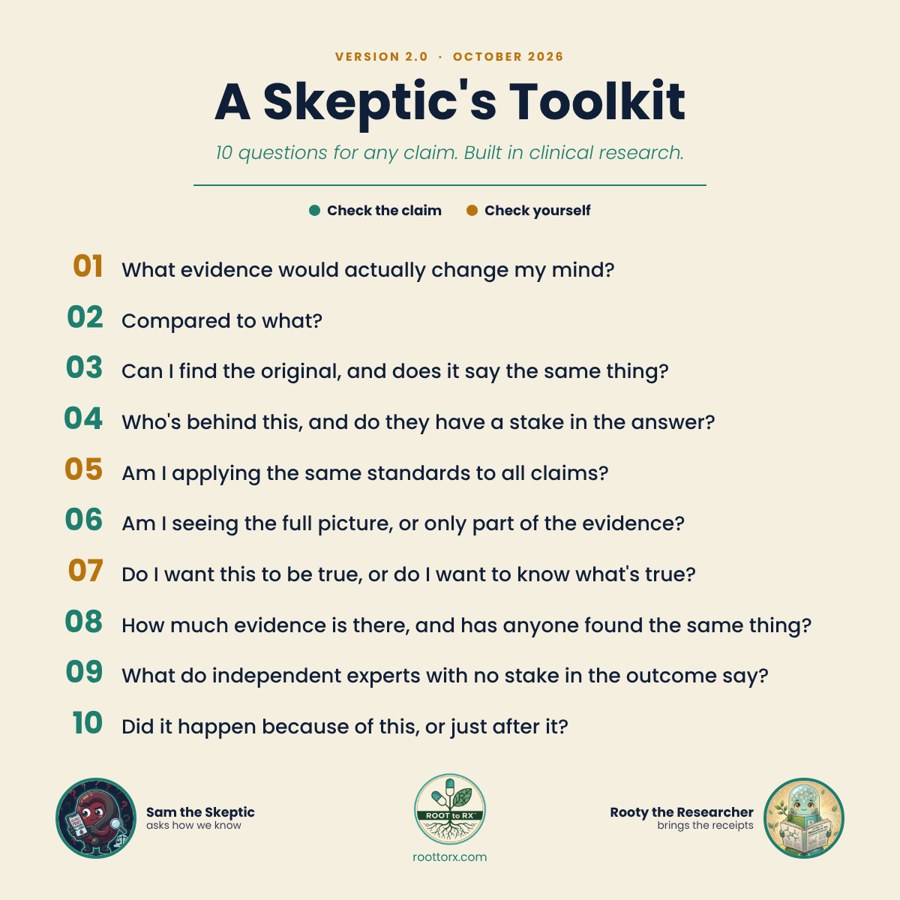
The ten questions
Seven check the claim. Three check you. The numbers match the printable card, so you can point to a question by number.
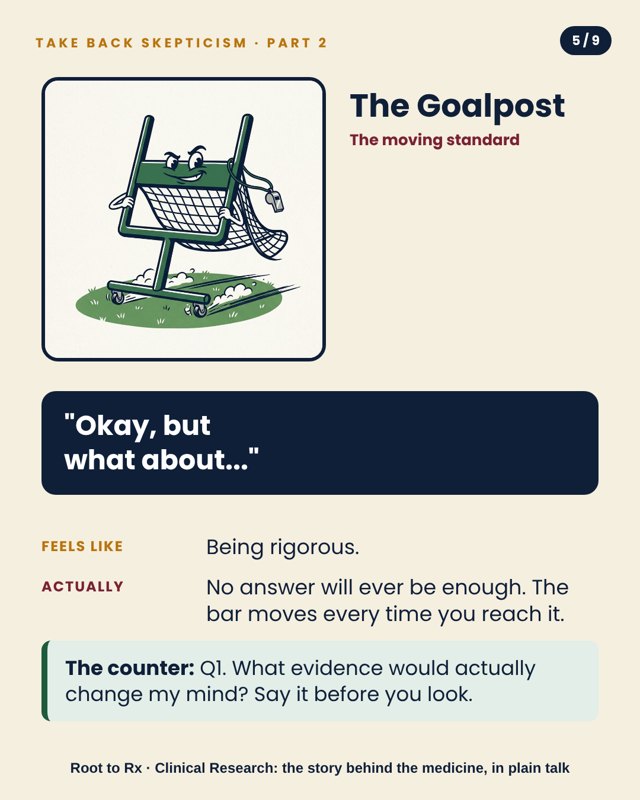
- 01What evidence would actually change my mind?Checks you
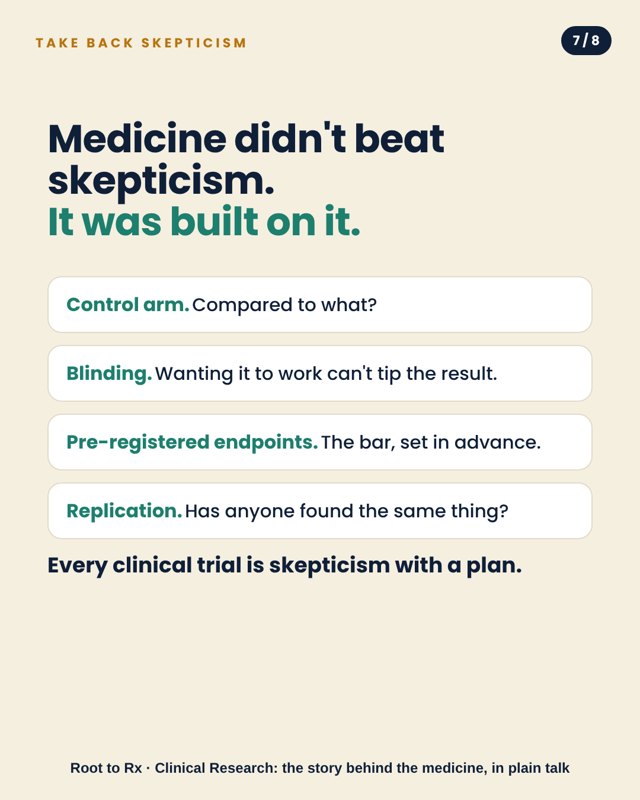
- 02Compared to what?Checks the claim
- 03Can I find the original, and does it say the same thing?Checks the claim
- 04Who’s behind this, and do they have a stake in the answer?Checks the claim
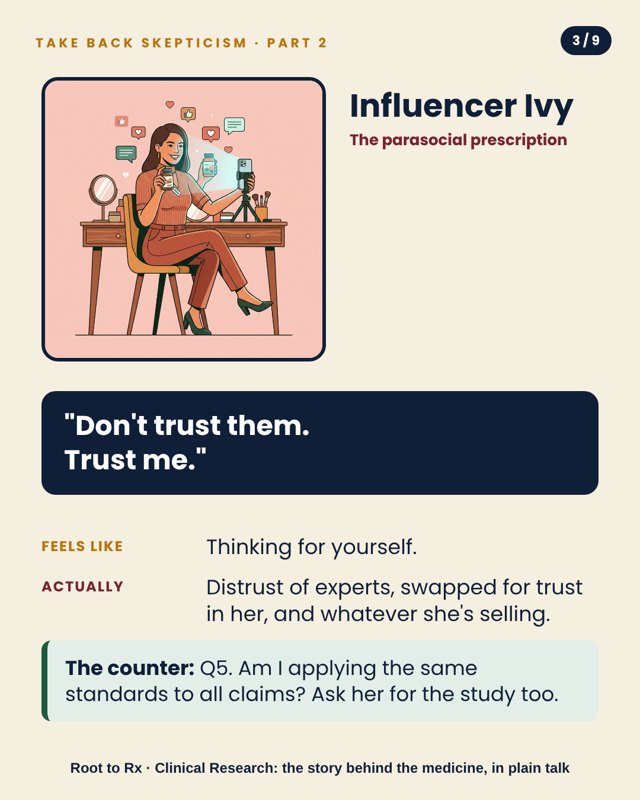
- 05Am I applying the same standards to all claims?Checks you
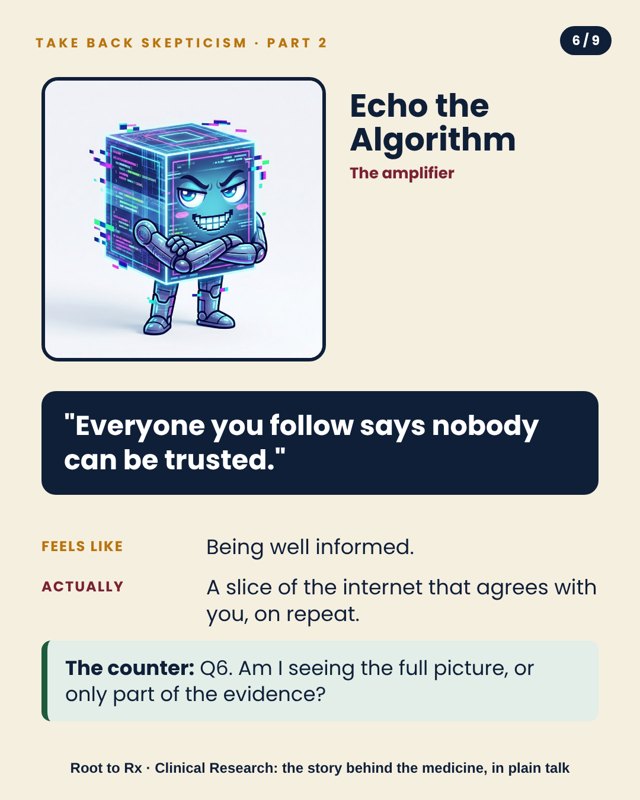
- 06Am I seeing the full picture, or only part of the evidence?Checks the claim
- 07Do I want this to be true, or do I want to know what’s true?Checks you
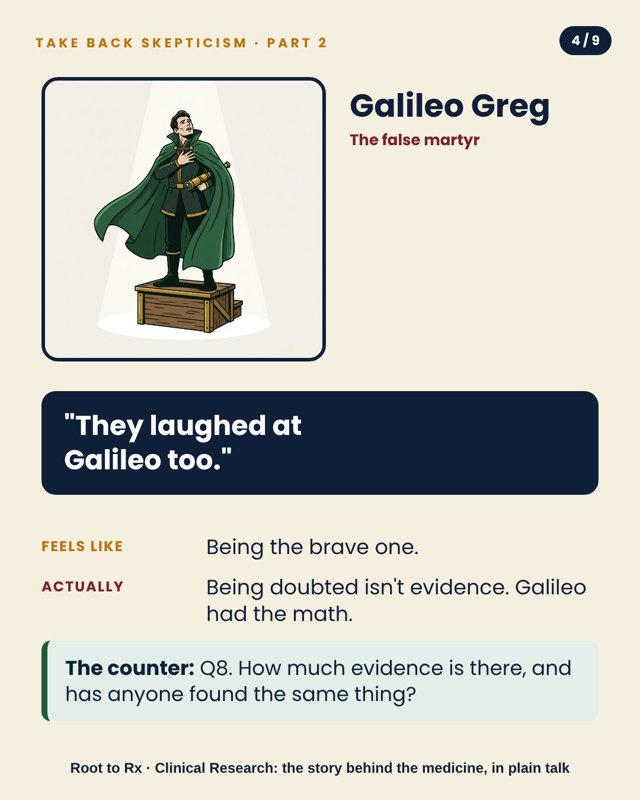
- 08How much evidence is there, and has anyone found the same thing?Checks the claim
- 09What do independent experts with no stake in the outcome say?Checks the claim
- 10Did it happen because of this, or just after it?Checks the claim
Calling yourself a skeptic
doesn’t make you one.
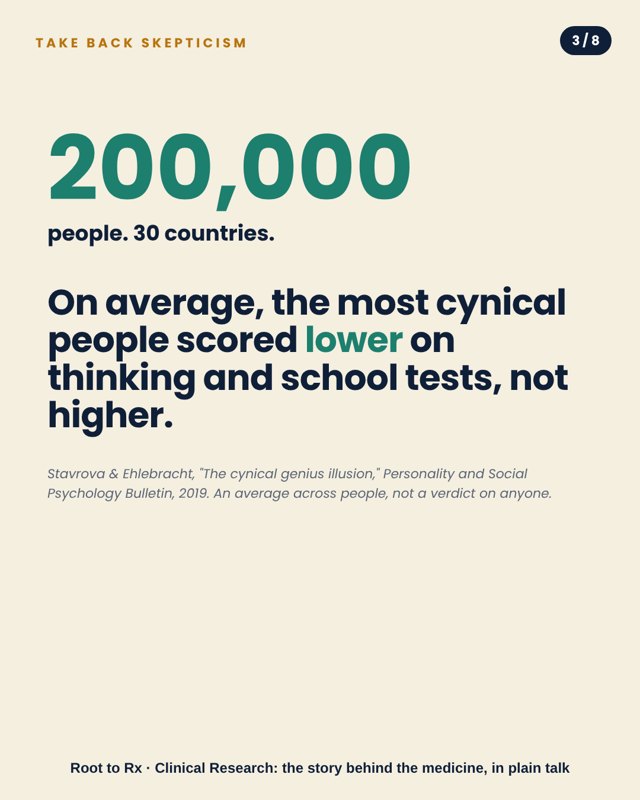
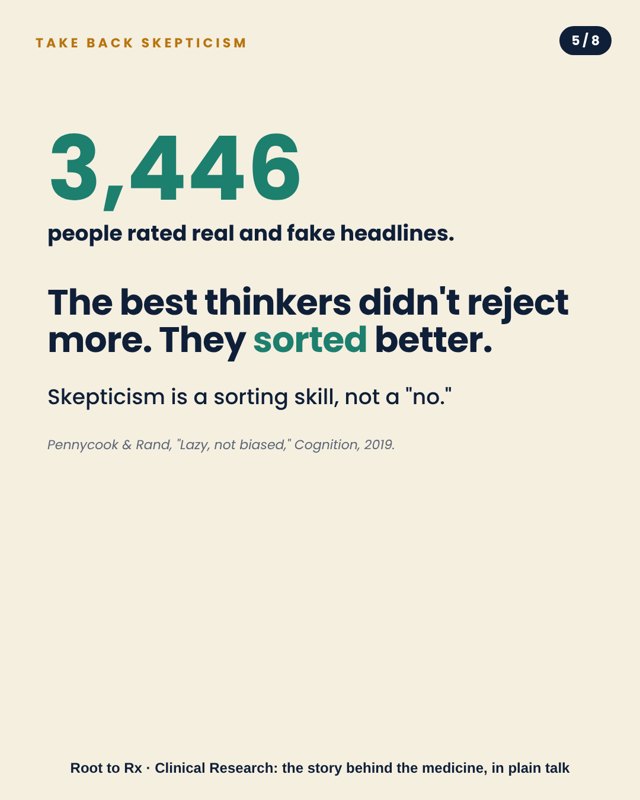
Skeptic and cynic both sound like doubt. The difference is the bar: a skeptic decides what evidence would change their mind before looking, and changes it when the evidence clears that bar.
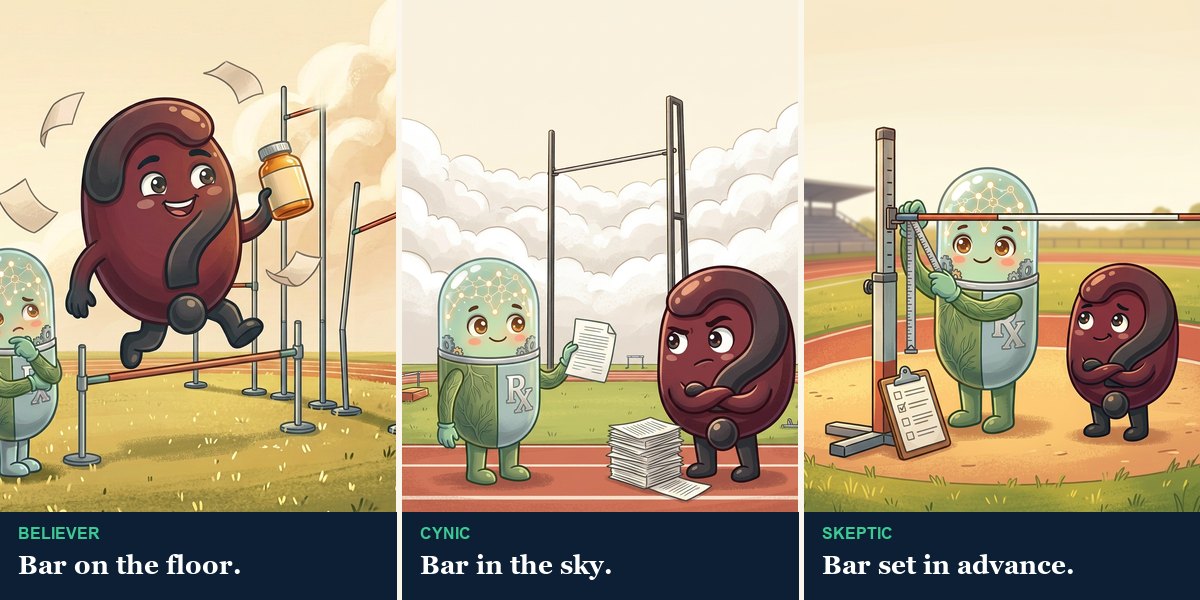
- Sets the evidence bar before looking
- Holds every claim to that same bar
- Changes their mind when the evidence clears it
- Never says what would change their mind
- Doubts tested medicine, trusts untested claims
- Keeps the same answer no matter the evidence
Years of clinical trials in people. The main goals were written down before the first patient enrolled. Then the FDA reviewed whether the benefits outweigh the risks. Some unproven treatments were tested and failed. Others never faced a bar at all.
Doubting the tested while trusting the untested isn’t skepticism. It’s cynicism with a better name.
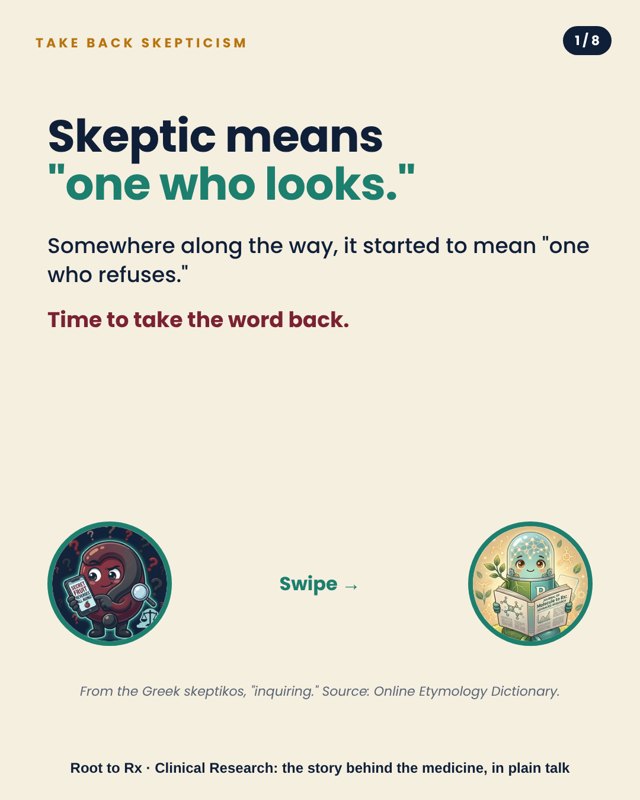
Skeptic means one who looks.
From our Take Back Skepticism series. Swipe or scroll each row.
What the research says
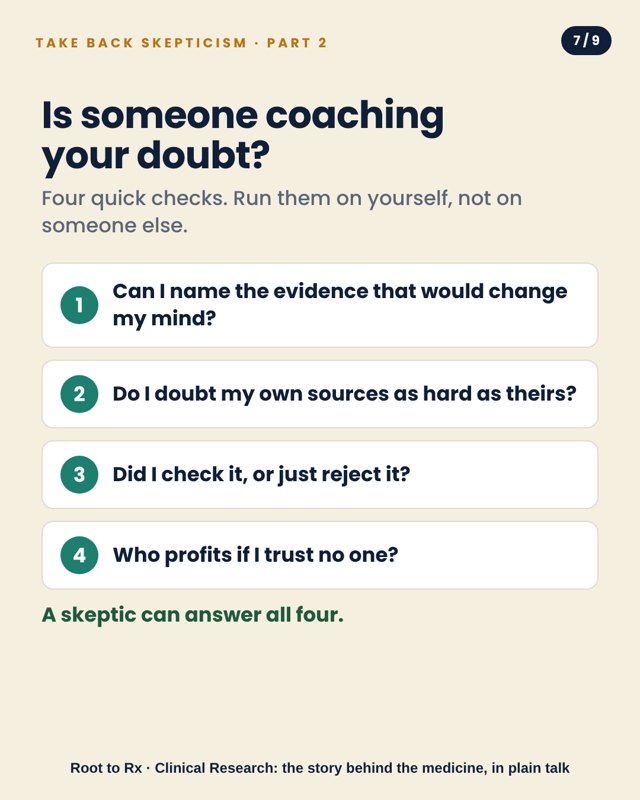
The crew that coaches your doubt, and the question that beats each one